

Gender Pay Gap Report 2025
Introduction
All UK organisations with over 250 employees are now required by law to carry out annual Gender Pay Reporting under the Equality Act 2010 (Gender Pay Gap Information) Regulations 2017.
This report outlines:
- Mean and median gender pay gaps
- Mean and median bonus pay gaps
- Proportion of males and females receiving a bonus
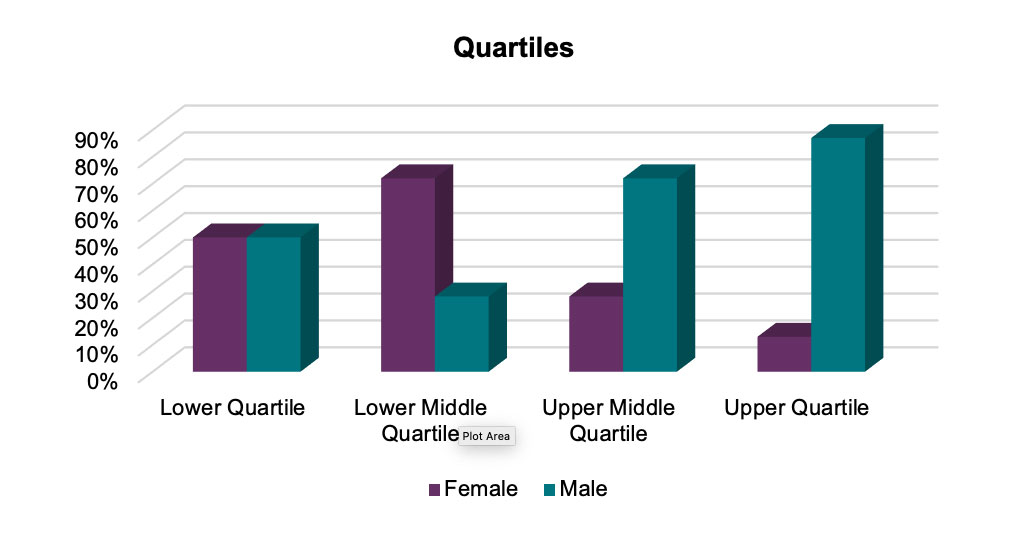
- Distribution of males and females across pay quartiles
The data is based on the snapshot date of 5 April 2025.
It is important to distinguish between:
Equal Pay – men and women receiving equal pay for equal work
Gender Pay Gap – the difference in average pay between men and women across the organisation
The Gender Pay Gap reflects workforce structure rather than differences in pay for the same role.
2025 Reported Figures
| 2025 | |
| Mean Pay Gap | 10.3% |
| Median Pay Gap | 6.0% |
Pay Quartiles
| Quartile | Male | Female |
| Upper Quartile | 86% | 14% |
| Upper Middle Quartile | 68% | 32% |
| Lower Middle Quartile | 24% | 76% |
| Lower Quartile | 50% | 50% |
Bonus Data
| Portion of Men and Women Who Received a Bonus | 0% |
| Mean Bonus Pay Gap | 0% |
| Median Bonus Pay Gap | 0% |
Year-on-Year Comparison
| 2024 | 2025 | |
| Mean Pay Gap | 10.7% | 10.3% |
| Median Pay Gap | 6.0% | 6.0% |
| Upper Quartile | 2024 | 2025 |
| Male | 87% | 86% |
| Female | 13% | 14% |
| Middle Upper Quartile | 2024 | 2025 |
| Male | 72% | 68% |
| Female | 28% | 32% |
| Middle Lower Quartile | 2024 | 2025 |
| Male | 28% | 24% |
| Female | 72% | 76% |
| Lower Quartile | 2024 | 2025 |
| Male | 50% | 50% |
| Female | 50% | 50% |
This shows a positive shift in female representation in higher pay quartiles, contributing to the reduction in the mean pay gap.
Workforce Overview
On the 5th April 2025 Thistle Seafoods employed 595 members of staff, 340 were male and 255 were female. The majority worked full time, with only two male members of staff working part-time.
Understanding our Gender Pay Gap
The data shows that males remain overrepresented in the upper and upper-middle pay quartiles.
This is largely driven by the concentration of male employees in higher-paid operational and technical departments, including Stores, Engineering, Chilled Coding Palletising, Hygiene and Sauce Plant.
The roles within these departments require employees to be willing to undertake some or all of the following: be able to lift weights up to 25kg; be willing to work in very cold conditions (up to -20°C); be physically capable of doing manual handling for the majority of the 8 – 12 hour shift; be willing to work in a wet environment; and be willing to work unsociable hours.
These factors, alongside industry trends, contribute to a higher proportion of male applicants and employees in these roles. For example, during the snapshot period (6th April 2024 to 5th April 2025) we had 165 individuals apply for a position within our engineering department. Four of which were female. In addition, our 2024 engineering apprentice recruitment received 49 applications, including three from female candidates.
This imbalance directly impacts representation in higher-paid roles and therefore the Gender Pay Gap.
Progress Made
Between 2024 and 2025 we have managed to increase the number of females in our middle upper and upper quartiles. This is due to the continued growth of our secondary site, and the requirement for additional supervisors and chargehands within our production, chilled coding and quality assurance teams, and the requirement for more quality assurers and hygiene cleaners. These positions were advertised both internally and externally and nine females were successful in being placed into a chargehand or supervisor role, two were employed as quality assurers and one was placed in our hygiene department as a hygiene cleaner. The data indicates that all of these roles fell within the middle upper and upper quartiles, and this has aided in reducing the mean gender pay gap by 0.4%
Closing the Gap Further
The primary driver of our Gender Pay Gap is the underrepresentation of females in higher-paid operational and technical roles, many of which align with STEM disciplines. While female participation in STEM has increased in recent years, women remain significantly underrepresented, particularly in engineering and technical roles. This is reflected in both application rates and workforce composition within our business. We recognise that addressing this imbalance is key to reducing our Gender Pay Gap over time.
Our Commitment and Actions
We are committed to maintaining fair and consistent recruitment practices, ensuring that all job adverts are inclusive, accessible, and promoted across a wide range of platforms to reach a diverse audience. We will continue to encourage female applicants by promoting opportunities within technical and operational roles more broadly and challenging perceptions around traditionally male-dominated areas. We will strengthen early talent engagement by working with schools, colleges, and careers initiatives to promote opportunities in food manufacturing and engineering to female candidates. Internally, we will provide training and development opportunities and continue to support progression into higher-paid roles. We will review role requirements to ensure they are necessary, proportionate, and do not unintentionally limit applications. In addition, we will monitor recruitment, promotion, and workforce data by gender to better understand trends and inform future actions. We remain committed to fostering an inclusive workplace culture where all employees are treated fairly and have equal access to opportunities regardless of gender.
Summary
Our Gender Pay Gap is primarily driven by workforce composition, particularly the underrepresentation of females in higher-paid operational and technical roles. During this reporting period, we have made positive progress, with increased female representation in the upper pay quartiles and a reduction in the mean pay gap. We recognise, however, that further progress will require sustained focus and commitment, and we remain dedicated to improving representation at all levels of the organisation while creating opportunities for all employees to develop and succeed.
Approval for this statement
This statement was approved by the Board of Directors on 27th March 2026.
Pamela Macdougall
27th March 2026
If you would like to find out any more information about any of our products please get in touch.